

Most people think of fragrance as aesthetic. Something that smells nice. A preference, like a color.
But the relationship between fragrance notes and the human brain is considerably more specific than that. Different aroma compounds interact with the olfactory system — and through it, the limbic system — in measurably different ways. Some reduce cortisol. Some stimulate serotonin pathways. Some activate reward circuits. Some bear structural similarities to human pheromones.
This is the science that informed the development of Intimacy Formula I. Not every combination of pleasant notes creates the same neurological effect. What follows is a breakdown of each layer of the formula — and what the research says about how it works.
Top notes: the opening shift
Top notes are what you smell first. They're the most volatile — they evaporate quickly and set the initial tone. In Intimacy Formula I, the top notes are Neroli, Bergamot, and Pink Pepper.
Neroli is derived from bitter orange blossom. In clinical aromatherapy research, neroli has been shown to significantly reduce anxiety and cortisol in both healthy adults and clinical populations. In one controlled trial, neroli inhalation reduced blood pressure and anxiety markers more effectively than a placebo control. For the purpose of creating an intimate environment, neroli's cortisol-lowering effect matters because high cortisol suppresses libido directly — particularly testosterone, which drives desire in both men and women.
Bergamot similarly shows robust anxiolytic effects in the research literature. It contains a compound called linalool, which has a documented calming effect on the central nervous system. But bergamot's profile is more complex than simple sedation — it also produces a kind of alert calm, a state of ease without drowsiness, which is precisely the neurological condition most conducive to desire.
Pink Pepper introduces a note of contrast — sharp, slightly spicy, energizing. It creates a sense of aliveness and subtle tension that prevents the opening from feeling merely relaxing. The interplay of bergamot's calm and pink pepper's edge creates a paradoxical state: settled, but awake. Open, but charged.
Heart notes: the emotional core
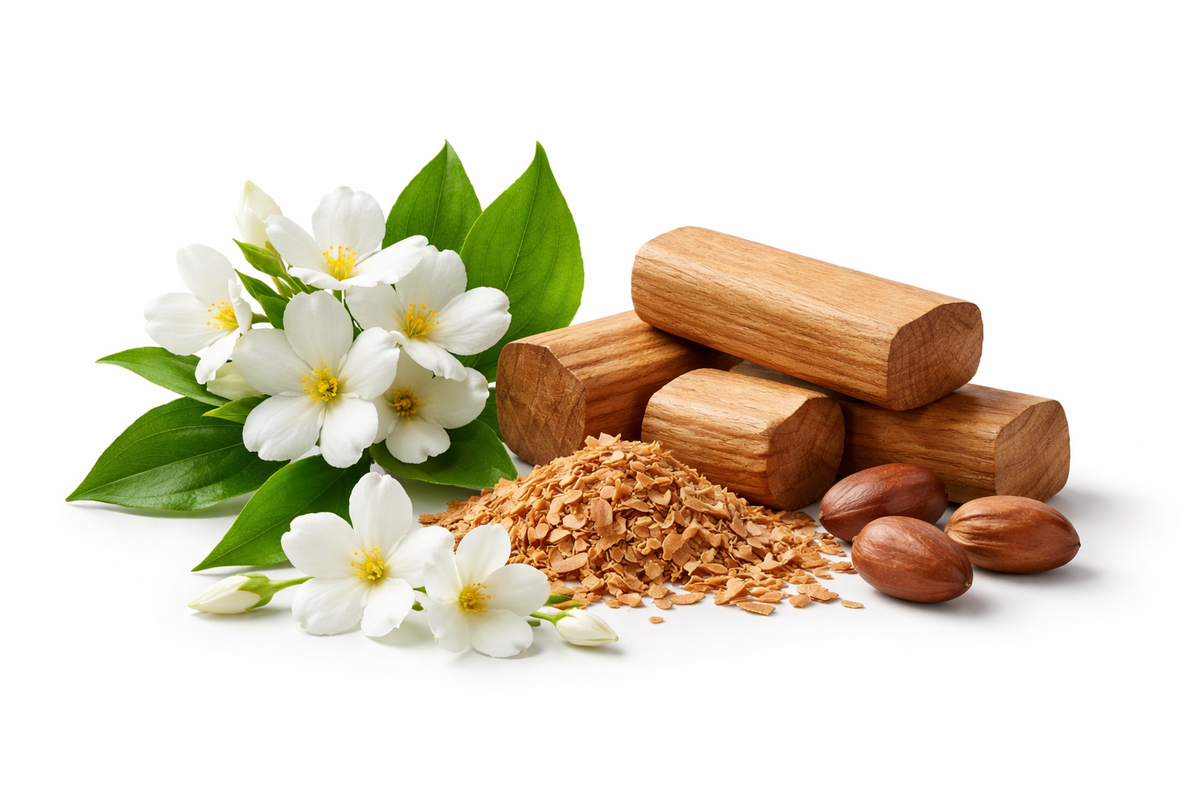
Heart notes emerge as the top notes fade and form the emotional signature of the fragrance. In Intimacy Formula I, these are Jasmine Sambac, White Tuberose, Peony, and Rose.
Jasmine sambac is one of the most studied aromatic compounds in psychophysiology. Research has documented its ability to increase serotonin-related brain activity, improve mood, and reduce feelings of tension. But jasmine's most documented effect in the context of intimacy is its ability to increase a state of heightened emotional sensitivity — more attuned, more receptive, more present to what is happening in the immediate moment.
White Tuberose is rich in methyl benzoate and benzyl alcohol — compounds associated with a warm, slightly hypnotic sensory effect. Tuberose has been used in fine perfumery for centuries as a "seductress" note — less for its direct neurological effect and more for the psychological state it creates: something between comfort and vulnerability.
Peony and Rose together provide the emotional warmth that grounds the floral heart. Rose in particular contains phenylethylamine (PEA) — the same compound that surges in the brain during attraction and early romantic love. Inhaling rose aroma has been associated in some research with elevated mood and increased feelings of affection.
Base notes: the skin and the staying power
Base notes are what linger. They emerge slowly, interacting with the warmth of skin to create the final, lasting character of a fragrance. In Intimacy Formula I: Vanilla, White Amber, Cashmere Musk, and Sandalwood.
Sandalwood is one of the most researched fragrance compounds in the context of human attraction. It contains a compound called santalol, which has been shown to interact with olfactory receptors that play a role in perceived attractiveness and warmth. More intriguingly, some research suggests that sandalwood compounds bear structural similarity to androstenol — a human pheromone-like compound — which may explain its documented cross-cultural association with sensuality and attraction.
Cashmere Musk operates largely below conscious perception. Musky base notes are processed by olfactory receptors that are closely related to those involved in pheromone detection. While the science of human pheromones is still evolving, the consistent finding across perfumery research is that musky compounds are rated as highly attractive across cultures — and this effect is most pronounced when processed subconsciously rather than analytically.
Vanilla is neurologically associated with safety, warmth, and comfort. It activates the same reward pathways as physical warmth and gentle touch. In the context of intimate connection, vanilla's effect isn't excitement — it's the deep ease that makes physical closeness feel natural rather than effortful. It's the note that makes you want to stay close.
White Amber adds depth and longevity to the base, creating the lasting skin warmth that turns a fragrance into something felt rather than merely smelled.
The formula in full
What emerges from this layered formula is not merely a pleasant fragrance. It's a neurological sequence.
The opening reduces cortisol and creates a state of alert, open calm. The heart activates emotional sensitivity and deepens presence. The base works on the brain's attraction circuitry, reward pathways, and the subconscious olfactory systems associated with human bonding and desire.
No single note produces these effects in isolation. The formula works because the notes work together — each layer preparing the neurological conditions for the next.
This is what neuro-designed means in practice. Not a marketing term. A design philosophy: every element chosen for a specific function, in service of a specific outcome.
Intimacy Formula I was built for one purpose. Every note earns its place.
Feel on purpose.


