

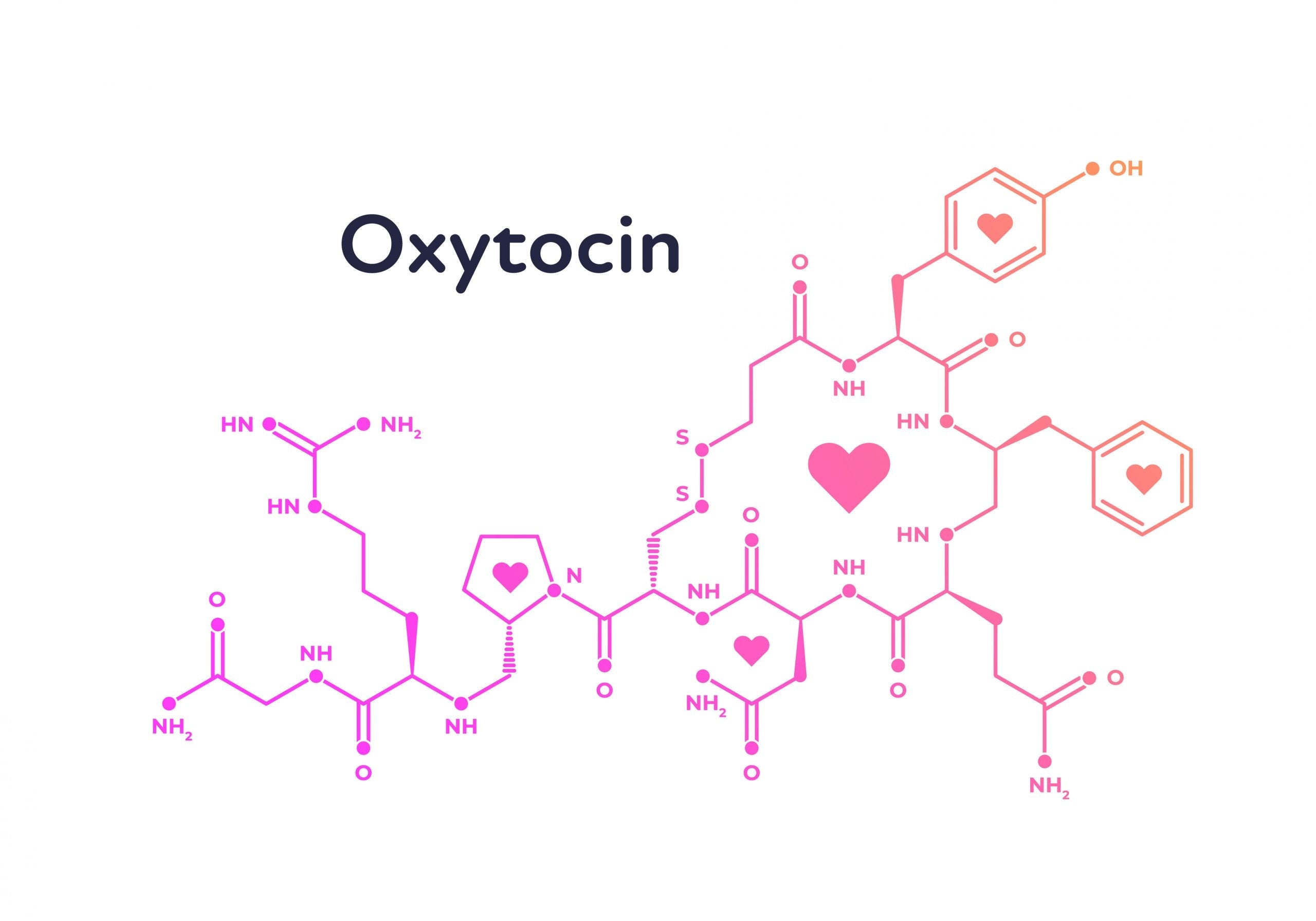
It's been called the love hormone, the bonding hormone, the cuddle chemical. But oxytocin is something more precise — and more interesting — than any of those names suggest.
Oxytocin is a neuropeptide produced in the hypothalamus and released by the pituitary gland. It plays a central role in social bonding, trust, emotional connection, and physical intimacy. It's released during touch, orgasm, eye contact, and certain sensory experiences. And perhaps most importantly for this conversation: it's not purely spontaneous. The conditions that trigger oxytocin release can be deliberately created.
What oxytocin actually does
The popular narrative around oxytocin focuses on its role in pair bonding — the chemical glue that keeps couples together. But its function is more nuanced than that.
Oxytocin reduces social anxiety and lowers the threat response in the amygdala. When oxytocin is elevated, your brain is less likely to interpret ambiguous situations as threatening, and more likely to interpret them as safe. This is what creates the feeling of emotional ease and openness with someone you're close to.
It also amplifies the reward signal from positive social interactions. Touch feels better. Eye contact feels more meaningful. Physical closeness is more pleasurable. Oxytocin essentially turns up the gain on connection.
And critically for desire: oxytocin works in concert with dopamine. When both are elevated — which happens during early romantic attraction and can be deliberately cultivated in long-term relationships — desire and attachment reinforce each other. You're drawn to the person you feel safe with. Safety and desire stop being opposites and start operating together.
The triggers: what the research shows
Touch is the most well-documented oxytocin trigger. Sustained, non-demand physical contact — a long hug, a slow back massage, lying close together — consistently produces measurable oxytocin release. The key word is sustained. A brief, perfunctory touch doesn't produce the same effect as slow, intentional contact.
Eye contact is another powerful trigger, particularly mutual, prolonged eye contact. Research on couples found that extended eye contact increased feelings of affection and closeness — and the neurochemical basis for this is at least partly oxytocin-mediated.
Shared positive experience — especially laughter, novelty, and moments of surprise — also elevates oxytocin. This is part of why doing new things together can reinvigorate connection in long-term relationships.
And then there's scent. Olfactory stimulation has been shown in several studies to influence oxytocin release, particularly when the scent is associated with a trusted, familiar person or a context of emotional safety. The mechanism is through the olfactory-limbic pathway — the same direct route by which scent reaches the emotional brain.
The role of environment in hormonal state
One thing the research makes clear is that oxytocin doesn't arise in a vacuum. Your hormonal state at any given moment is a product of your current environment, your current emotional state, and your current level of stress.
Cortisol — your primary stress hormone — is antagonistic to oxytocin. When cortisol is elevated, oxytocin pathways are suppressed. This is why intimacy after a stressful day can feel forced or flat. The body's biochemistry is working against it.
This means the environment you create before intimacy matters as much as — possibly more than — the intentions you bring to it. Creating conditions that reduce cortisol and prime oxytocin release isn't a nice-to-have. It's the mechanism.
Soft, warm lighting reduces cortisol. Physical warmth and comfort increase it. Touch starts the process. And scent — particularly fragrances that activate the brain's emotional center and are associated with safety and closeness — can prime the system before anything else has started.
Can you build a practice around this?
Yes. And many of the couples with the strongest, most sustained intimate connection — whether they use this language or not — have done exactly that.
The practice doesn't need to be complicated. It needs to be consistent. Consistent sensory cues repeated in the context of connection train your brain's association networks. A specific scent lit every time you create space for each other. A specific ritual of slowing down, putting screens away, making actual contact. These repeated patterns build neurological grooves that make the desired state more accessible over time.
This is the design philosophy behind Intimacy Formula I. Each of the 11 fragrance notes was selected for its documented or well-evidenced effect on the brain's chemistry — reducing stress hormones, activating the limbic system, priming the emotional brain for openness and connection. Used consistently, the fragrance itself becomes part of the trigger.
Light it. Touch each other. Let oxytocin do its work.
Feel on purpose.


